Why Sailor Suits Captivate

Arvind Singh
| 27-04-2026
 · Art Team
There's something undeniably charming about the sailor suit. Whether it's the crisp white collar, the simple navy blue and white color scheme, or the undeniable sense of nostalgia it brings, the sailor uniform has somehow managed to captivate the global imagination.
But why is this specific style so beloved across cultures? From its origins to its influence on pop culture, let's dive into why the sailor suit continues to conquer global aesthetics.
The Origins of the Sailor Suit
The sailor suit's history can be traced back to the early 19th century in Europe, particularly in Britain and France. It was originally designed as a functional outfit for young boys in naval training. The uniform was practical, easy to move in, and instantly recognizable. The naval influence was undeniable, with its double-breasted front, wide collar, and the signature “sailor tie.”
But what started as a practical garment for sailors quickly made its way into mainstream fashion, particularly as it became a symbol of youth and innocence. It wasn't long before the sailor suit became a favorite for children, especially in Western countries, thanks to its association with adventure, exploration, and a certain carefree spirit.
A Symbol of Purity and Innocence
The sailor suit didn't just remain a piece of naval gear. Over time, it evolved into a symbol of purity, youth, and nostalgia. Its association with the open sea, fresh air, and wide horizons resonated deeply with both children and adults.
Think of the famous images of children dressed in sailor suits, their faces glowing with youthful energy and curiosity. The sailor suit was a symbol of innocence and adventure—everything people loved about childhood, wrapped in a neat, tidy package. In a world where fashion often represents sophistication or maturity, the sailor suit stood out as something fresh and uncomplicated.
The Influence on Pop Culture
Fast forward to the 20th century, and the sailor suit's popularity took on a new life thanks to pop culture. Who could forget the iconic image of Marilyn Monroe in her sailor dress from The Seven Year Itch? Or Popeye, the cartoon character known for his strong, heroic traits, wearing a sailor suit? It was no longer just a children's uniform—it had become a symbol of both playful innocence and underlying strength.
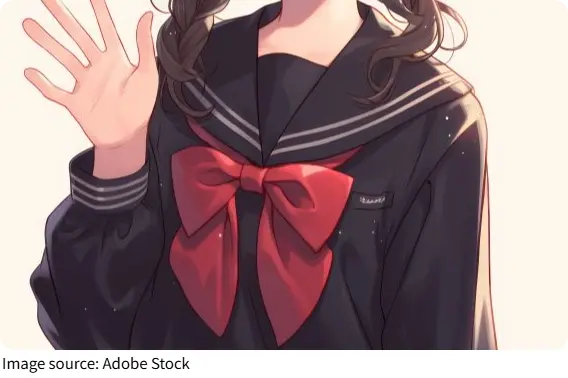
But it didn't stop there. In Japan, the sailor suit became iconic in school uniforms, forever tying it to the aesthetic of youthful energy and determination. The simplicity and structured design of the outfit made it the perfect fit for school uniforms, but over time, it also became a significant fashion trend in anime and pop culture. The sailor suit in Japan carries with it a unique blend of both youthful innocence and power, often associated with characters who are ready to take on the world.
Why It Resonates Globally
So, what makes the sailor suit such a universal symbol? Its simplicity, perhaps, plays a big part. The sailor suit is both timeless and adaptable. The design isn't overly complicated, yet it conveys a strong message of purity and adventure. Whether it's seen in a child's play or a fashion runway, the sailor suit has an effortless cool that transcends generations and cultures.
The color palette—navy blue and white—is universally flattering. The navy blue suggests authority and tradition, while the white adds freshness and innocence. These two colors together create a balanced, approachable, and stylish look.
Also, its strong connection to maritime culture connects it to an ideal of adventure, the open sea, and freedom. The sailor suit evokes a sense of escape, of discovering something beyond the horizon, which is a universal human desire.
Modern-Day Adaptations
While the sailor suit may have originated as a practical garment for boys, today it's not limited to any specific gender or age group. Designers have taken the classic elements of the sailor suit and reimagined it for modern fashion, blending it with other styles to create chic and trendy looks. Whether it's a sailor-inspired jacket, dress, or a playful accessory like a sailor tie, this style continues to be reinterpreted in countless ways.
Even in the world of haute couture, the sailor suit shows up on the runway, a nod to its enduring legacy. Its influence can be seen in collections by top designers who use the familiar elements—a structured collar, clean lines, and nautical details—to create something fresh yet nostalgic.

The Enduring Appeal
At its core, the sailor suit is more than just a piece of clothing—it's an aesthetic that represents timelessness, youth, and adventure. It evokes a sense of nostalgia while also being forward-looking, adaptable to every era. From childhood memories to modern reinterpretations, the sailor suit captures a spirit of innocence and exploration that appeals to people of all ages and backgrounds.
Maybe that's why, even today, the sailor suit still holds a special place in global fashion and culture. It's not just about the outfit—it's about what it represents: a connection to something pure, simple, and, ultimately, universally loved.